Compare excavator grapples by application, weight, jaw geometry, mounting interface and hydraulic requirements. Confirm machine fit, rotation type and attachment condition.
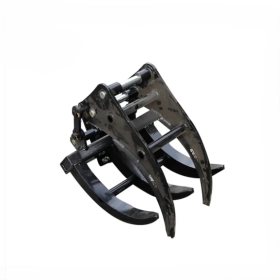
Chwytak hydrauliczny do drewna minikoparki Rippa R10 R13 R15 Zte Meyer
Added: 30.09.2026, 09:21
None of the offers in “Excavator grapples” fit?
Review the available offers and, if none fits, describe your requirements. Verified companies may respond after confirmation and moderation.
2 short steps. Clicking the button does not publish anything.
How to choose an excavator grapple
Start with the material and the handling task. Sorting grapples are used to pick, sort and position irregular material, while a timber grapple should suit the diameter, weight and handling pattern of logs. Multi-purpose designs differ in jaw geometry, opening range and intended duty. Do not assume that every grapple operates in the same way: it may be rigid, linkage-operated or hydraulically powered, and may be supplied with or without powered rotation.
Specifications to compare
- Machine compatibility: identify the excavator's exact model, configuration and serial number. Compare grapple weight, recommended machine class and the carrier's limits for attachment and lifting work. A statement such as “for 5–8 tonne excavators” is not a complete fitment check.
- Mounting interface: confirm the coupler interface or the pin-on dimensions, including pin diameters, pin-centre distance and inside ear width. Establish whether the adapter, rotator and hoses are included in the listing.
- Hydraulics and rotation: compare the required pressure and flow for opening and closing. If powered rotation is fitted, check its requirements separately, together with the number of circuits, connections and control arrangement. The data sheet for the exact model takes precedence over a general “hydraulic” label.
- Geometry and working data: compare width, maximum and minimum opening, jaw profile, tine or rib arrangement, attachment weight, closing force and rated load. Make sure figures from different manufacturers use equivalent definitions.
- Equipment and wear parts: check for a load-holding valve, end stops, replaceable edges or tines, bushes and pins, and confirm replacement-part availability. The design and supplied equipment vary by model.
What to inspect on a used grapple
Ask for the identification plate or model marking, full mounting dimensions and clear photographs of the jaws both open and closed, the sides, underside, adapter and rotator. Look for cracks, distortion, uneven jaw closure, welded repairs and wear at edges, tines, pins and bushes. On a hydraulic unit, inspect cylinders, hoses, connections, leaks and play in the rotation mechanism. Confirm final compatibility in the documentation for the grapple, coupler and exact excavator configuration.
Buyer FAQ
Is the excavator weight class enough to select a grapple?
No. It is only a starting point. Attachment weight, mounting interface, geometry, hydraulic requirements, machine configuration and the manufacturer's working and lifting limits must also be checked.
Does every rotating grapple need the same hydraulic setup?
No. Requirements depend on the grapple, rotator, coupler and machine controls. Opening and closing may use different pressure and flow limits from the rotation circuit, so both functions must be verified separately.
What information should a used-grapple listing include?
The most useful details are the make and model, serial number, weight, mounting type and dimensions, opening range, width, rated load, hydraulic requirements, rotation type and clear photographs of working parts, hydraulics and repairs.

 Log in with Facebook
 Log in with Google


