Building a house using the self-build system allows you to save up to 8–25% of the total investment costs. One of the first dilemmas faced by an independent investor planning to do some of the work themselves is the question: should you buy a mini excavator, rent equipment with an operator, or outsource all earthworks to an external company?
The answer is not straightforward — but it can be calculated. In this article, we’ve gathered up-to-date market data from 2026, specific cost scenarios, and one key decision criterion: after how many planned days of mini excavator work does buying start to make financial sense.
What will you learn from this article?
- What is a mini excavator used for in construction?
- What qualifications are required?
- Which mini excavator is best for building a house?
- How much does rental with an operator cost?
- When does buying a mini excavator pay off?
- What does resale look like after construction?
What is a mini excavator used for in construction?
A mini excavator is a compact construction machine that, when building a single-family home, can work from the first scoop in the ground to the last cleanup jobs on the plot. On construction forums, the question often arises which tasks such a machine is suitable for and whether it is truly worth looking for one for personal needs—or if a one-off rental is enough.
Work during the main construction phase
At the beginning of house construction, a company with a mini excavator or an independent investor with the required certificates will dig foundations, dig trenches for water, sewage, electricity, and gas connections, and prepare the area for drainage and dewatering. The compact track excavator handles soft terrain on construction sites well, where full-size construction equipment cannot access or is too heavy for weak ground.
An excavator weighing 1.8–2.5 tons will easily dig a septic tank or treatment plant, level ground for a driveway and paths of paving stones. Importantly—the machine’s work is many times faster than digging by hand. A trench for an installation that would take a team half a day with shovels, an experienced operator with a mini excavator can do in an hour.
Garden work and land management after construction
When the walls are up and the roof covered, the mini excavator comes back into play—in the garden this time. The machine digs a space for a pool or pond, shapes slopes, levels the plot after the main construction work is completed, prepares the soil for a lawn and flower beds, and with the right tool removes old shrubs, tree roots, and demolition remains. Gardening companies usually charge more for the same tasks than construction companies—having your own excavator lets you do it yourself.
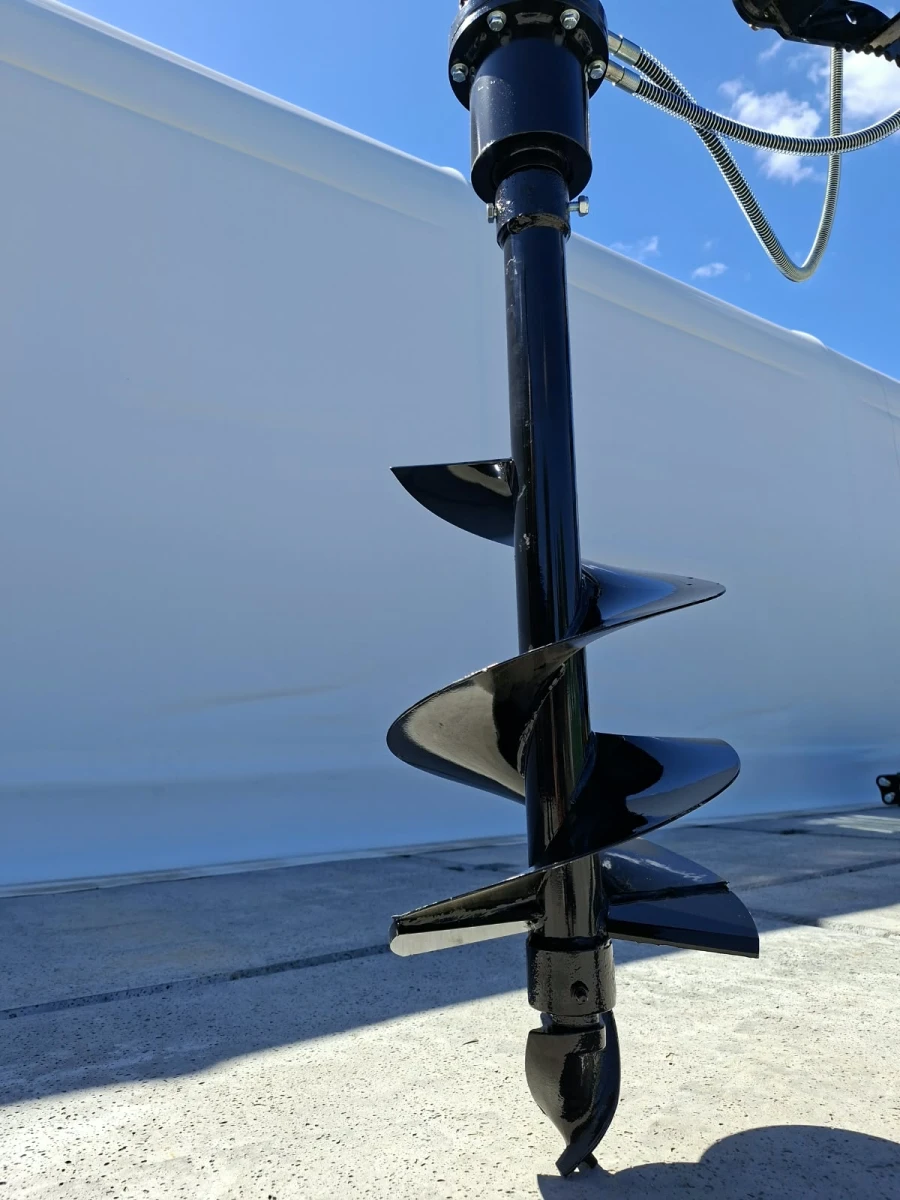
An excavator with a demolition hammer will also manage demolition of old walls, concrete steps, and broken fences. A machine equipped with a hydraulic auger makes holes for fence posts and pergola footings—these are tasks that a standard construction company prices separately and often requires a separate schedule.
How many hours does a mini excavator actually work when building a house?
Building practice estimates show that a typical single-family house with garden management generates a total of 60–250 hours of mini excavator work. This wide range results from the difference between an investor who outsources only the main excavations and one who also digs a pool, builds a pond, levels all terrain, and builds drainage. This number is the key starting point for the financial calculation we present later in the article.
What qualifications are required?
This is one of the topics often oversimplified on construction forums—but it directly affects profitability when buying a mini excavator as a private person. Operating an excavator involves specific formal requirements that cannot be skipped.
What does the law say?
In Poland, there is no separate category of license “just for a mini excavator”. By current regulations, operating a mini excavator requires a vocational qualification certificate in the field of earth-moving excavators class III or backhoe loaders class III. The exam is held before a commission of the Institute of Construction Machinery and Rock Mining—this is a formal requirement that no rental company can ignore.
An excavator operator should have three documents: a vocational qualification certificate, a machine operator’s book, and current health and safety training. Training at centers usually costs several thousand PLN—plus class and state exam time. This is a real cost item that enters the overall mini excavator purchase budget.
Risks of using a mini excavator without qualifications
On private house builds, some investors operate mini excavators themselves without formal certificates. Rental companies providing the excavator without an operator usually require the relevant documentation—with an accident, lack of qualification means the insurer will refuse to pay compensation. This is a legal and financial risk to be considered when deciding on your own machine.
Practical advice: if you don’t have an excavator operator’s license and do not plan to obtain one, you must add the cost of hiring an operator for every work session to the mini excavator purchase price. This changes the entire cost-effectiveness calculation.
Which mini excavator is best for building a house?
The market offers machines in a very wide range—from cheap devices produced by Chinese companies to reputable European and Japanese brands. When building a house just once, the choice of equipment matters not only technically but, above all, financially: it concerns the value you will recover when reselling after the work is complete.
Optimal weight and working parameters
For a typical building plot for a single-family house, the most universal are mini excavators weighing 1.8–2.5 tons. A digging range of about 3.5–4.5 m and a digging depth of 2.5–3 m is fully satisfactory for foundation, installation, and gardening works. Lighter machines (1–1.5 t) apply less pressure on the ground—a benefit is less ground compaction—but their performance on deep excavations may be insufficient.
Body width below 1 m with retracted tracks is a big advantage in tight access and dense buildings. Most investors building a standard house effectively dig with a 1.8–2.2 t machine—a good compromise between mobility, working power, and bucket capacity.
How to choose equipment for planned tasks?
To sensibly select a set of working tools for planned building and gardening tasks, it is worth considering at least:
- Backhoe buckets in three widths—30, 45, and 60 cm (for utility lines and foundations),
- A grading bucket for landscaping slopes, leveling ground, and garden tasks,
- Mechanical or hydraulic quick coupler—changing equipment in minutes, no tools needed,
- Hydraulic drill for fence posts and small architectural footings,
- Optional: a demolition hammer for concrete and old wall demolition.
Which brands are worth considering?
On the Polish market for used mini excavators and excavators, brands like Kubota, Yanmar, Caterpillar, Komatsu, JCB, and Takeuchi are the most popular. Equipment from these companies retains high residual value, and the availability of parts and service in Poland is a key argument—because an excavator failure on a site means downtime and unexpected costs.
Check whether the machine’s engine has a documented service history—this is one of the first things buyers ask about when valuing excavators on the used market. Cheaper, lesser-known brands may be tempting at purchase, but a limited service network and lower resale value often erase that apparent saving.
How much does renting a mini excavator cost?
Before you decide to buy, you need to know the exact alternative cost. Below are current mini excavator rental rates—market data for 2026.
Mini excavator hire with operator
This is the most convenient option for an investor without the required license or experience in operating construction machinery. The mini excavator company delivers both the machine and a qualified operator—earthworks are carried out quickly and without mistakes made while learning the controls. An experienced operator digs much more efficiently than someone sitting at the controls for the first time.
| Mini excavator class | Hourly rate (net) | Working day cost (8 h, net) |
|---|---|---|
| 1.5–2 t with operator | 140–200 PLN | 1,120–1,600 PLN |
| 2–3 t with operator | 160–250 PLN | 1,280–2,000 PLN |
To these amounts, add transport costs to the construction site—most companies charge 100–300 PLN within a radius of about 30–50 km. The total cost of renting a mini excavator with an operator for main earthworks for a typical house is usually 2,500–10,000 PLN net for 2–5 working days.
Renting an excavator without an operator
If you have the qualifications, renting an excavator without an operator is a cheaper option per hour of machine work. The daily rental price for a mini excavator without an operator is 200–400 PLN net depending on the model and rental company. Additionally, there are costs not often mentioned in the price list:
- Transporting the excavator to site: 100–300 PLN,
- Returnable deposit: 1,000–2,000 PLN,
- Fuel and any extra insurance.
For 15–25 days of self-performed work, the total cost of renting an excavator without an operator is 4,500–10,000 PLN net—excluding transport and fuel. Construction equipment rental companies often offer discounts for weekly or longer orders—always ask about this.
Hidden costs worth knowing
Both hiring a mini excavator with an operator and renting only the equipment involve costs not always listed on the company’s price list. These are downtimes due to machine unavailability, waiting for delivery, or extra charges for work on rough ground or with non-standard equipment. A good tip: ask for a weekly or monthly rate—most companies with mini excavators will negotiate for jobs longer than several days.
When does buying a mini excavator pay off?
This is the heart of the entire article. Below are specific scenarios based on current market data—choose the one that best matches your situation when building your house.
Current mini excavator purchase prices
On the Polish secondhand market, known-brand mini excavators in the 1.8–2.5 t class can be bought for 38–90 thousand PLN net, depending on year, hours worked, and equipment. New mini excavators from reputable producers start at about 150 thousand PLN. Cheaper machines from lesser-known companies in Europe—from several thousand PLN upwards—but with serious reservations about service and resale value.
Four scenarios—specific cost comparison
| Scenario | Mini excavator working time | Equipment acquisition model | Estimated total cost (net) | Conclusion |
|---|---|---|---|---|
| A. Main excavations and foundation work | 2–3 days (16–24 h) | Rental with operator | 3,000–5,000 PLN | Purchase not profitable |
| B. House + extensive garden work | 8–12 days (60–100 h) | Rental with operator in stages | 10,000–20,000 PLN | Purchase worth considering |
| C. House + garden, own work | 15–25 days | Excavator rental without operator | 4,500–10,000 PLN + transport and fuel | Depends on qualifications and risk |
| D. House + further projects or excavator services | 30+ days over 1–2 years | Purchase of used mini excavator + resale | Value loss approx. 9–18 thousand PLN | Purchase may be profitable |
Key decision criterion
From the analysis above, a practical rule emerges: for less than 25–30 planned working days on a single build, renting equipment—with or without an operator—is financially more advantageous than buying a mini excavator. The value loss when buying and then reselling (around 9–18 thousand PLN) is similar to the cost of a few weeks’ hire of a mini excavator company.
Buying an excavator starts to make clear sense when the investor plans:
- Several more construction or renovation projects,
- Providing excavator services for neighbors or friends after their own build,
- Long-term work on their own plot over several seasons,
- Renting the mini excavator with operator as additional income after building the house.
What goes into the full purchase budget?
Investors often compare only the purchase price to the cost of hire—omitting accompanying expenses that really increase total outlay. With a machine purchase, you must add to the total budget:
- Excavator operator training and state exam—a few thousand PLN if you don’t have certificates,
- Mini excavator insurance,
- Equipment transport to and from the site,
- Regular servicing and any repairs,
- Storage between work stages.
Adding all these costs gives a true financial picture and allows you to make a considered decision.
What does selling the mini excavator after construction look like?
One of the most common arguments for buying a mini excavator is the ability to sell it after building and recover most of your money. How does this work in practice—and what determines the final transaction price?
How does the excavator lose value?
Mini excavators from reputable companies are among building machines that hold their value relatively well on the secondhand market. For moderate working hours and a documented service history the value loss in a 1–2 year horizon is usually 10–25%. An excavator bought for 60,000 PLN can be sold for 45–54,000 PLN net—making the true cost of having your own equipment during the house build 6–15,000 PLN.
This is a result comparable to the cost of several weeks’ mini excavator rental with operator. The key difference: with your own machine, you have access anytime, without having to arrange with a rental company or wait for machine availability.
What raises resale value?
- Well-known brand with good parts and service availability (Kubota, Caterpillar, Komatsu, JCB, Yanmar, Takeuchi),
- Low working hours for the machine’s age,
- Full documentation of inspections and repairs,
- Rich equipment—quick coupler, bucket sets, grading bucket,
- Current technical checks and complete documents.
What lowers value and makes sale harder?
- Exotic brand with limited parts/service access,
- Signs of heavy use—wear in pins, hydraulic leaks, worn tracks,
- Lack of documentation or neglected servicing,
- High working hours in a short timeframe.
Where to sell the mini excavator after construction?
In Poland, industry portals such as Mascus and Machineryline work best, as well as local ads and construction forum groups. A well-prepared offer with full service documentation, a set of photos from every side, and a reliable technical description usually results in a sale within weeks. A reputable brand excavator with low hours and full equipment is always sought after—especially during the building season.
Summary
The decision to buy a mini excavator for building a house is a matter of numbers, not emotion. Here are the most important takeaways from this article:
- A mini excavator is useful at every construction stage—from foundation, utilities, earthworks on the plot, to landscaping the garden after the house is finished.
- Formal operator qualifications are required to operate a mini excavator independently—the lack excludes self-work or requires hiring an external operator, changing the cost-effectiveness of purchase.
- The optimal choice for building a single-family house is a 1.8–2.5 t mini excavator from a reputable brand, complete with buckets and quick coupler—this equipment retains the highest resale value.
- For less than 25–30 days of planned work on one house, hiring an excavator—with or without an operator—is financially superior to buying.
- Buying a mini excavator with resale in mind makes sense if you plan intensive use, further developments, or want to offer local excavator services.
- Always include a full budget for a purchase: the equipment price is just the start—add servicing, insurance, transport, and possible operator training.
Check listings in the mini excavators category →